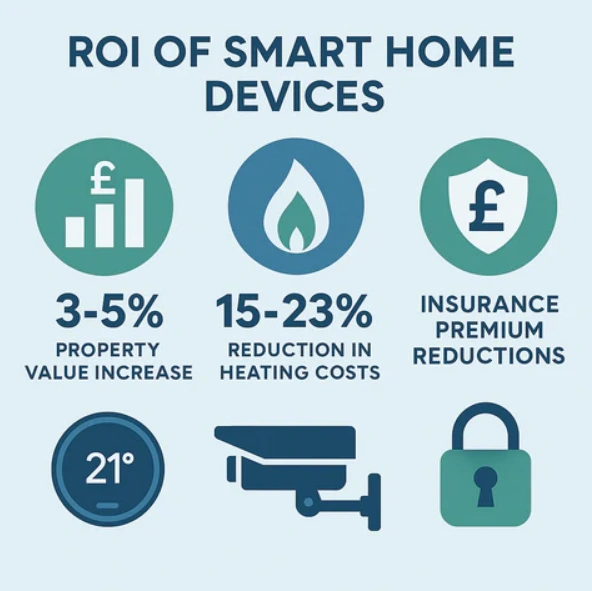
Smart homes do more than simplify life—they amp up resale prices and attract buyers faster. Integrating tech like automated lighting or security cams can lift a property’s worth by 3-5%, based on market insights. This edge comes from efficiency gains, lower bills, and enhanced safety that modern buyers crave. Homes with these features often sell quicker, sometimes fetching premiums as buyers see long-term savings.
Energy management stands out. Smart thermostats learn routines, cutting heating costs by 15-23%. Security systems deter threats with real-time alerts, adding peace of mind. Convenience features, such as voice-controlled appliances, make daily tasks effortless. For sellers, this translates to competitive listings in crowded markets.
Investors note the shift. With 81% of buyers preferring smart-equipped homes, properties without lag behind. One report highlights how IoT devices push values up by up to 5% in key areas. Upfront costs average $1,000-5,000, but ROI hits through quicker sales and higher offers—up to 70% of buyers pay extra.
Privacy concerns exist, yet encrypted systems mitigate risks. Focus on certified installs for reliability. This guide unpacks how specific features elevate value, with real examples and tips. Whether flipping or holding, smart upgrades position your asset for growth. Expect strategies that blend tech with appeal, turning standard houses into sought-after gems.
Insert image of a high-tech kitchen in a smart home demonstrating increased appeal here.
Energy Efficiency: Cutting Costs and Attracting Eco-Buyers
Smart energy tools lead the charge in boosting home values. Thermostats like Nest adjust automatically, slashing utility bills by 10-15%. They integrate with solar panels, optimizing power use. Homes with these see a 3% value bump, as buyers prioritize green living.
Real case: A renovated property added smart plugs and monitors, reducing energy waste. It sold 20% above comps, per agent feedback. Insights show insurance discounts for efficient setups, further enhancing appeal.
Tips: Start with whole-home audits via apps. Pair with LED bulbs for compounded savings. In multifamily units, this tech lifts valuations by 3-5% through lower operating costs. Focus on ROI—devices pay back in 2-3 years.
For larger homes, zoned systems prevent overuse in empty rooms. This resonates with millennials, who value sustainability. Overall, energy smarts make properties future-proof, drawing premium offers.
Security Upgrades: Deterring Threats and Building Buyer Confidence
Advanced security ranks high for value addition. Cameras and sensors provide remote monitoring, with AI spotting anomalies. Properties with these fetch 5% more, as safety tops buyer lists.
Example: A suburban home installed video doorbells and locks, closing faster than similar listings. Studies confirm 62% view smart security as resale boosters. It reduces insurance premiums too.
Practical steps: Choose systems with cloud storage for evidence. Integrate with lights for automated deterrence. In high-crime areas, this feature seals deals.
Buyers feel secure knowing they can check feeds anytime. For rentals, it minimizes vacancies. This tech elevates perceived quality, justifying higher prices.
Automation and Convenience: Streamlining Daily Life
Automation draws tech-savvy crowds. Voice hubs control everything from shades to ovens, saving time. Such homes command 3-5% premiums, with 70% buyers willing to pay up.
One flipper added routines—lights on at dusk—and sold quickly. Tip: Ensure compatibility across brands to avoid glitches.
In open houses, demo features to wow prospects. This convenience appeals to busy professionals, enhancing livability and value.

Pros and Cons of Smart Home Features for Property Value
- Pros of Energy Tools: Reduce bills by 15-23%, attracting green buyers; quick ROI through rebates and efficiency.
- Cons of Energy Tools: Upfront costs may deter budget sellers; dependency on stable Wi-Fi risks minor disruptions.
- Pros of Security Systems: Boost value by 5%; faster sales as 81% prefer secure homes.
- Cons of Security Systems: Subscription fees add ongoing expenses; privacy worries if not encrypted properly.
- Pros of Automation: Enhances appeal to millennials; properties sell 20-30% quicker in competitive markets.
- Cons of Automation: Learning curve for older buyers; potential obsolescence as tech evolves.
Alternatives and Quick Comparisons
Kitchen remodels offer timeless appeal. They increase value by 5-10% but cost more upfront than smart tech; lack ongoing savings compared to energy-efficient devices.
Landscaping upgrades enhance curb appeal cheaply. Pros include broad attraction; cons involve maintenance needs versus smart homes’ low-effort automation.
Final Thoughts and Expert Advice
Smart homes elevate value through efficiency, security, and ease. Standout benefits: 3-5% price hikes, quicker sales, eco-appeal.
Prioritize high-ROI features like thermostats. Consult pros for installs. Track market trends. This approach maximizes returns, making your property a smart investment.
FAQ
How do smart locks specifically influence buyer offers? They provide keyless entry and remote access, often leading to 2-3% higher bids by emphasizing convenience and security.
What role does integration play in long-term value? Seamless hubs prevent fragmentation, ensuring updates keep tech current, which sustains appeal over years.
Can smart tech offset aging home drawbacks? Yes, by modernizing features like lighting, it refreshes older properties, attracting younger buyers effectively.
How does data from smart devices aid appraisals? Usage reports demonstrate efficiency, helping appraisers justify higher valuations based on proven savings.